
Embark on a journey into the realm of AI hiring tools and recruitment automation, where technology meets talent acquisition in a seamless blend of innovation and efficiency.
Delve deeper into the intricacies of AI tools for recruitment and discover how they are revolutionizing the hiring landscape.
Overview of AI hiring tools and recruitment automation
AI hiring tools in recruitment refer to the use of artificial intelligence technology to streamline and enhance the hiring process. These tools automate various aspects of recruitment, from sourcing candidates to assessing their qualifications, ultimately improving efficiency and decision-making in the hiring process.
Benefits of using AI in the recruitment process
- Increased efficiency: AI can quickly sift through large volumes of resumes and applications, saving time for recruiters.
- Improved candidate matching: AI algorithms can analyze candidate data to identify the best fit for a particular role based on skills, experience, and other factors.
- Reduced bias: AI tools can help reduce unconscious bias in the hiring process by focusing on candidate qualifications rather than personal characteristics.
- Enhanced candidate experience: AI-driven recruitment processes can provide candidates with a more seamless and personalized experience, leading to higher engagement and satisfaction.
Examples of popular AI tools used for recruitment automation
- Talentsoft: This AI tool helps in sourcing, screening, and assessing candidates, providing valuable insights to recruiters.
- HireVue: Utilizing AI-powered video interviews, HireVue analyzes candidate responses to assess their skills and suitability for a role.
- X0PA AI: X0PA AI uses predictive analytics to identify high-potential candidates and predict their performance in a given role.
Types of AI tools for recruitment
AI tools have revolutionized the recruitment process by providing innovative solutions to streamline hiring procedures. Let’s delve into the different categories of AI tools used in recruitment and how they can benefit organizations.
AI-Powered Resume Screening Tools
AI-powered resume screening tools utilize machine learning algorithms to analyze resumes and identify top candidates based on predefined criteria. These tools can significantly reduce the time spent on manual resume screening, allowing recruiters to focus on more strategic aspects of the hiring process.
- Automated resume parsing helps extract relevant information from resumes efficiently.
- Predictive analytics can assess a candidate’s fit for a particular role based on their experience and skills.
- Eliminates unconscious bias by focusing on qualifications rather than personal characteristics.
Chatbots for Candidate Engagement
Chatbots are AI tools that interact with candidates in real-time, providing information about job openings, scheduling interviews, and answering frequently asked questions. These tools enhance candidate experience by offering instant responses and personalized communication.
- Ensures prompt communication with candidates, improving engagement and reducing drop-off rates.
- Provides a seamless application process by guiding candidates through each step.
- Collects feedback from candidates to enhance the recruitment process continuously.
Streamlining the Hiring Process with AI Tools
AI tools can streamline the hiring process by automating repetitive tasks, identifying top talent efficiently, and enhancing the overall recruitment experience for both recruiters and candidates. By leveraging AI technologies, organizations can save time and resources while making data-driven hiring decisions.
- Automates job postings across multiple platforms to reach a wider pool of candidates.
- Analyzes candidate data to predict future performance and cultural fit within the organization.
- Improves the quality of hire by matching candidates with the right job roles based on skills and experience.
Implementation of AI tools in recruitment
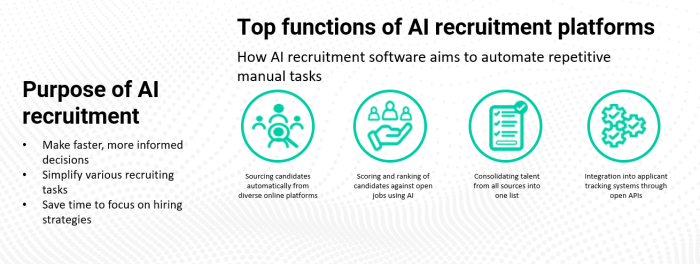
Implementing AI tools for recruitment automation involves several key steps to ensure successful integration and utilization within existing processes. Companies can follow best practices to effectively incorporate AI tools and overcome challenges during adoption.
Steps involved in implementing AI tools for recruitment automation:
- Assessing current recruitment processes: Conduct a thorough evaluation of existing recruitment processes to identify areas where AI tools can be integrated for improvement.
- Setting clear objectives: Define specific goals and objectives for implementing AI tools, such as reducing time-to-hire, improving candidate quality, or enhancing the candidate experience.
- Choosing the right AI tools: Research and select AI tools that align with the organization’s needs and objectives, considering factors such as scalability, ease of integration, and compatibility with existing systems.
- Integration and training: Integrate the selected AI tools into the recruitment process and provide training to HR staff and hiring managers on how to effectively use the tools.
- Monitoring and optimization: Continuously monitor the performance of AI tools, gather feedback from users, and make necessary adjustments to optimize their effectiveness.
Best practices for integrating AI tools into existing recruitment processes:
- Start small and scale gradually: Begin by implementing AI tools in one aspect of the recruitment process and gradually expand their use to other areas as the organization becomes more familiar with the technology.
- Collaborate with internal stakeholders: Involve HR, hiring managers, and other key stakeholders in the decision-making process to ensure buy-in and alignment with organizational goals.
- Ensure data privacy and compliance: Implement measures to protect candidate data and ensure compliance with data privacy regulations when using AI tools for recruitment.
- Provide training and support: Offer comprehensive training and ongoing support to employees to help them effectively utilize AI tools and maximize their benefits.
How companies can overcome challenges when adopting AI tools for recruitment:
- Educate employees: Address any concerns or misconceptions about AI tools by providing education and training on how they work and the benefits they offer.
- Monitor bias and fairness: Implement measures to prevent bias in AI algorithms and ensure fairness in the recruitment process by regularly auditing and testing the tools.
- Regularly assess performance: Continuously evaluate the performance of AI tools and make adjustments as needed to address any issues or improve outcomes.
Ethical considerations in AI-based recruitment
As technology continues to advance, the use of AI in recruitment has raised several ethical considerations that organizations need to address. It is crucial to examine the potential ethical issues that may arise when implementing AI tools in the hiring process.
Potential biases in AI tools
AI tools for recruitment have the potential to introduce biases that can impact the hiring decisions. These biases may stem from the data used to train the AI algorithms, leading to discrimination based on factors such as gender, race, or age.
It is essential to be aware of these biases and take steps to mitigate them.
- AI algorithms may unintentionally favor candidates from specific demographic groups, leading to a lack of diversity in the workforce.
- Biases in the data used to train AI tools can perpetuate existing inequalities in the recruitment process.
- AI tools may not always provide transparent explanations for their decisions, making it challenging to identify and address biased outcomes.
Strategies for fairness and transparency
To ensure fairness and transparency when using AI tools for recruitment, organizations can implement the following strategies:
- Regularly audit AI algorithms to identify and correct biases in the recruitment process.
- Provide clear explanations for how AI tools make hiring decisions to ensure transparency for both candidates and hiring managers.
- Use diverse and representative data sets to train AI algorithms, reducing the risk of biased outcomes.
- Implement human oversight in the recruitment process to review AI-generated recommendations and ensure they align with organizational values.
Conclusive Thoughts
In conclusion, AI hiring tools and recruitment automation offer a glimpse into the future of HR processes, promising enhanced productivity and precision in candidate selection.
FAQ Insights
What are the main benefits of using AI in recruitment?
AI in recruitment streamlines the process, improves candidate experience, and enhances decision-making based on data analytics.
How can companies ensure fairness when using AI tools in recruitment?
Companies can mitigate biases by regularly auditing AI algorithms, providing transparency in decision-making, and ensuring diverse data sets for training.
What are some popular AI tools used for recruitment automation?
Popular AI tools for recruitment include Mya, XOR, and HireVue, which streamline processes like resume screening, candidate engagement, and interview scheduling.
![The Ultimate Guide to Talent Sourcing [2025]](https://interior.jpnn.com/wp-content/uploads/2025/11/1-Approaches-to-sourcing-talent-75x75.jpg)